The Sacred Kavu of Edakkad
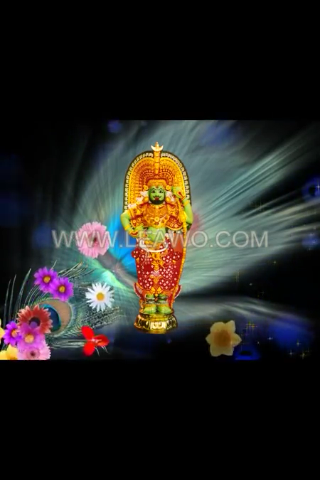
Sree Oorpazhassi Kavu
An ancient sacred grove and revered centre of worship in Northern Malabar, carrying through generations the spiritual traditions and heritage of Edakkad.
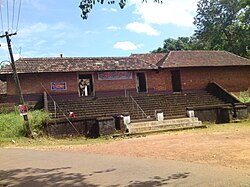
Click the image to view it in full size
The Sacred Grove
Sree Oorpazhassi Kavu is one of the ancient and revered sacred groves of Northern Malabar. It is situated at Edakkad, a historic village between Kannur and Thalassery in Kerala.
The Kavu retains the character of an ancient kavu — a sacred grove in which nature itself forms an integral part of the spiritual landscape. The traditions associated with the shrine have been preserved through generations and continue to form an important part of the religious and cultural heritage of Edakkad.
The name is traditionally understood in relation to the ancient settlement of Edakkad. Ooru refers to a village or settlement, while Achi carries the meaning of mother. Thus the name Oorpazhassi Kavu remains closely associated with the ancient village and its presiding deity.
The Divine Tradition
According to the traditional belief associated with the Kavu, Sree Parvathi, in her form as Kali, performed penance in this sacred grove.
The legend relates that Parvathi undertook her meditation after Lord Shiva playfully referred to her dark complexion. Pleased with her devotion, Lord Brahma is traditionally believed to have blessed her with a complexion resembling the lotus and declared her the Ooru Devatha — the presiding deity of the village.
Thus arose the tradition of the shrine of Bhagavathy. Later traditions associate Parasurama with the installation of Daivathar and Vettakkorumakan.
The Kavu consequently represents a remarkable confluence of Shakti, Shaiva and Vaishnava traditions within a single sacred precinct.
Mele Kottam
The Upper Courtyard
Mele Kottam, or the Upper Courtyard, is traditionally regarded as the original abode of the village deity.
Its sanctum is associated with Thondachan, traditionally regarded as Harihara — the unified form of Vishnu and Shiva.
Thondachan is revered in the tradition of the Kavu as Guru and Vaidya, representing wisdom, healing and the understanding of the essential unity of creation.
"The Divine is One, though approached through many forms."
Sacred Rituals
Oorpazhassi Kavu is distinguished by ritual traditions that have been preserved over generations.
One of the principal traditions is the Daivathar Vellattom. Traditionally, the ritual is performed during the day when the sun reaches the centre of the sky. The vertical rays of the sun are said to fall directly upon the sanctum of Mele Kottam.
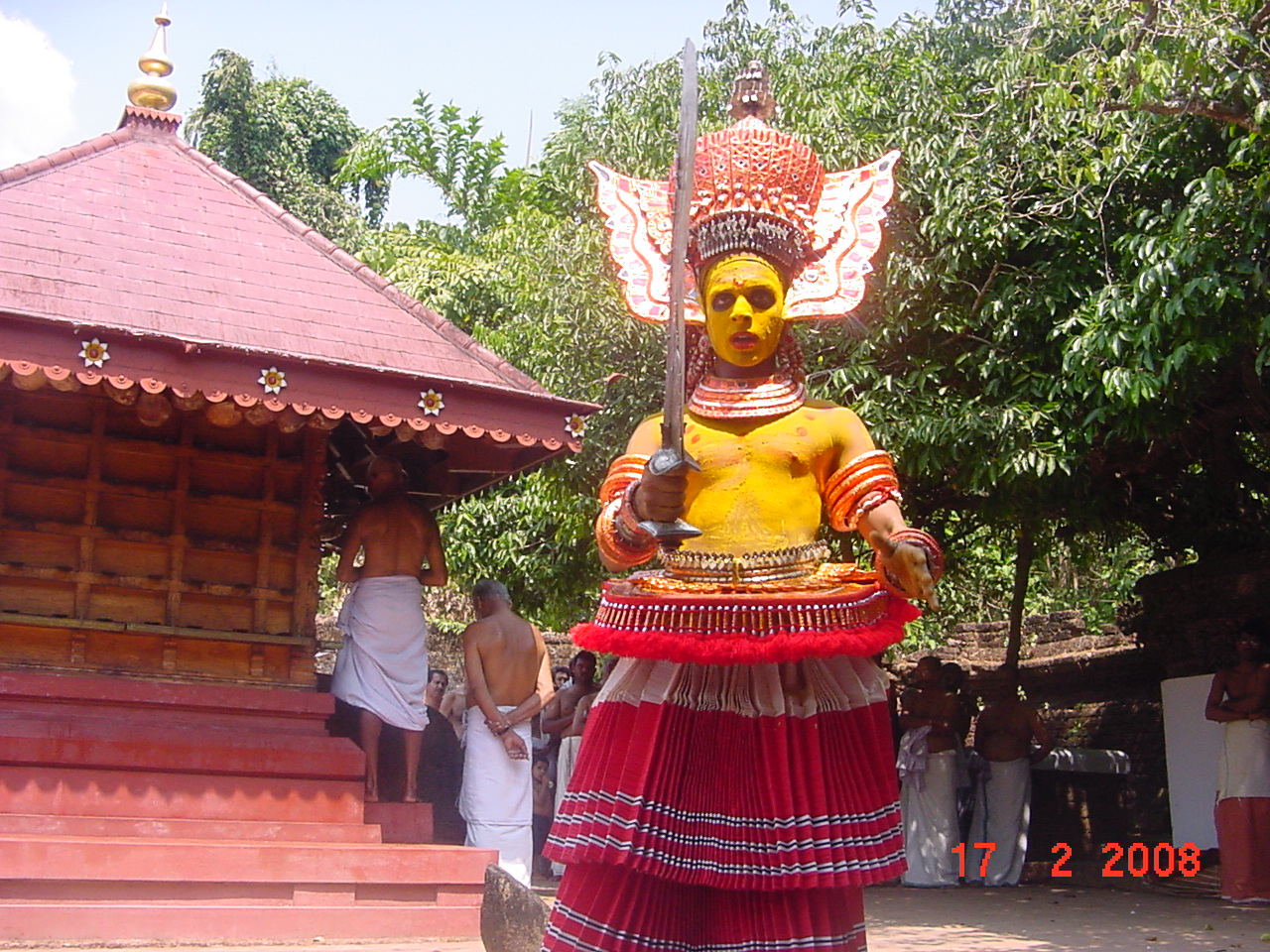
Daivathar Vellattom
The chanting of the sacred OM forms part of this ritual tradition. The Kavu also observes Vettakkorumakan Kaliyattam, associated traditionally with the night.
These rituals are regarded by devotees as occasions of profound spiritual significance and form an important part of the living heritage of the Kavu.
The Sun and Shani Tradition
Mele Kottam is also traditionally associated with the worship of Shani, or Saturn.
In Hindu tradition, Shani is the son of Surya, the Sun God. The rituals associated with Mele Kottam are therefore understood within a wider spiritual tradition connecting the Sun, Shani and the removal of obstacles attributed to Shani Dosha.
Devotees participate in these rituals with faith in the blessings of the Divine, seeking peace, protection and spiritual strength.
A Living Heritage
Oorpazhassi Kavu is more than a temple building. It is a living sacred landscape in which worship, nature, family tradition and community memory have remained intertwined through generations.
The Kavu occupies a particularly important place in the history and traditions of the Edakkad Nambiars, also known as the Randu Illam Vargam.
According to the traditions preserved by the families, the Kavu and its Ooraima became associated with the Nambiar families descended from the two ancient matrilineal branches connected with Kuliyambethu and Edupidikkeri.
Over generations, these families formed the group of Ooralar families traditionally entrusted with the administration and responsibilities associated with the Kavu.
The story of Oorpazhassi Kavu is therefore inseparable from the history and heritage of Edakkad itself.
The Spirit of Oorpazhassi Kavu
For devotees, the Kavu is a place of worship and spiritual experience. For the people of Edakkad, it is a repository of collective memory. For the families historically connected with it, the Kavu represents an enduring link with their ancestors and their heritage.
May the sacred traditions of Oorpazhassi Kavu continue to illuminate generations to come.